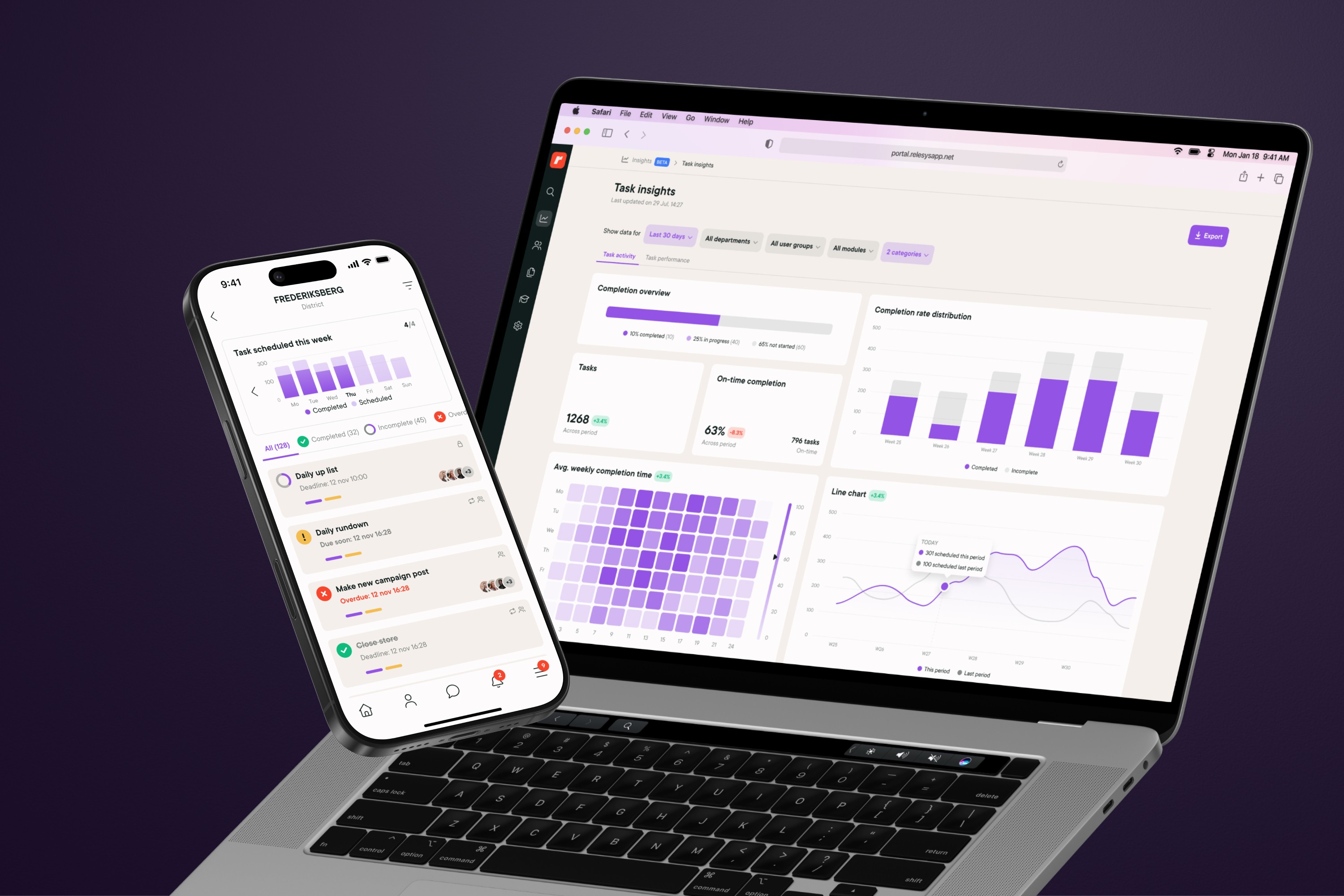
Designing for end-to-end retail operations
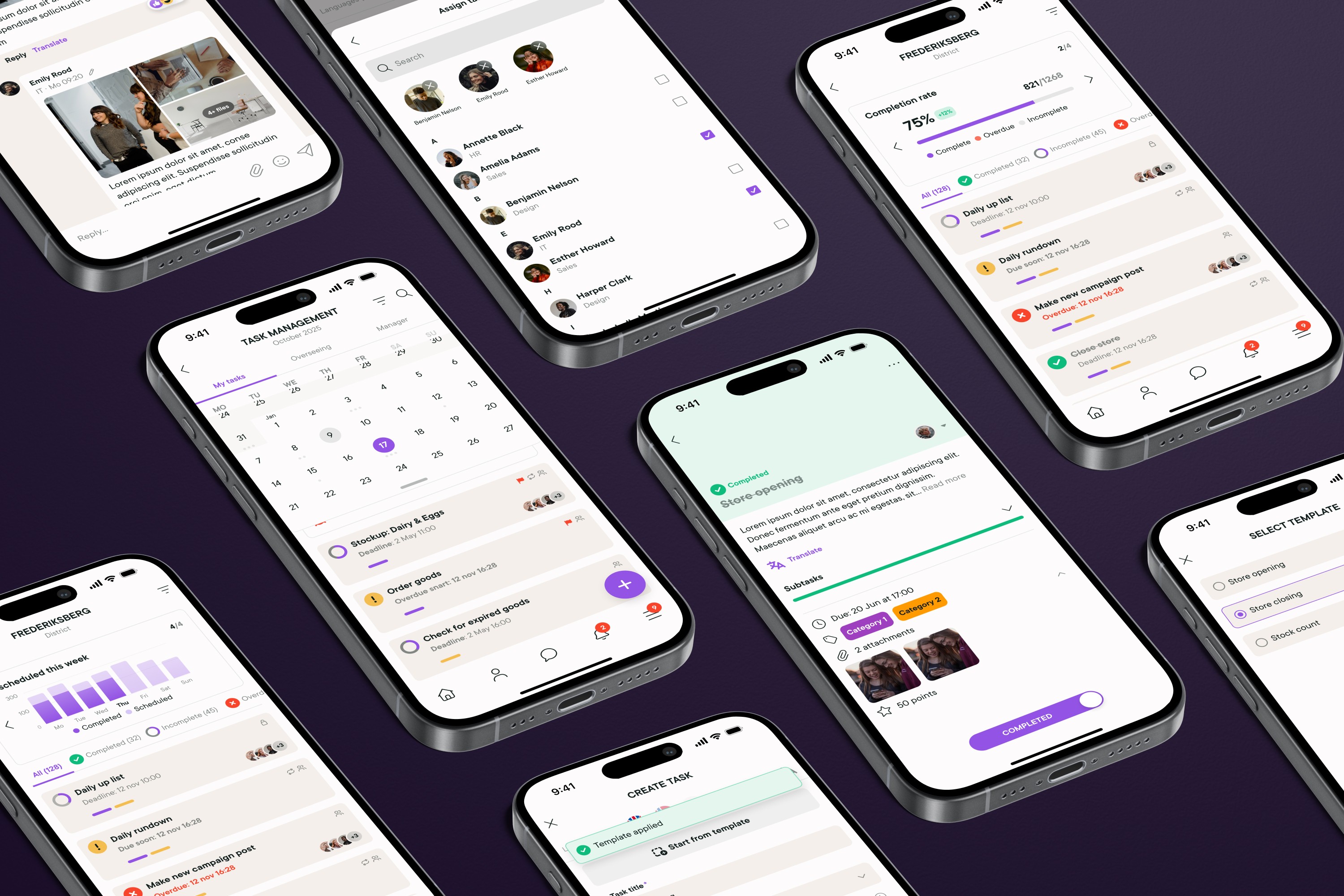
During my time at Relesys I was part of redesigning the Task Management module, intended for end-to-end retail operations from HQ all the way to the shop floor. This work consisted of extensive discovery, co-developement and design to reshape core parts of the product experience. We touched everything from basic navigation, task creation, compliance, reporting and measuring operational excellence.
Understanding retail operations
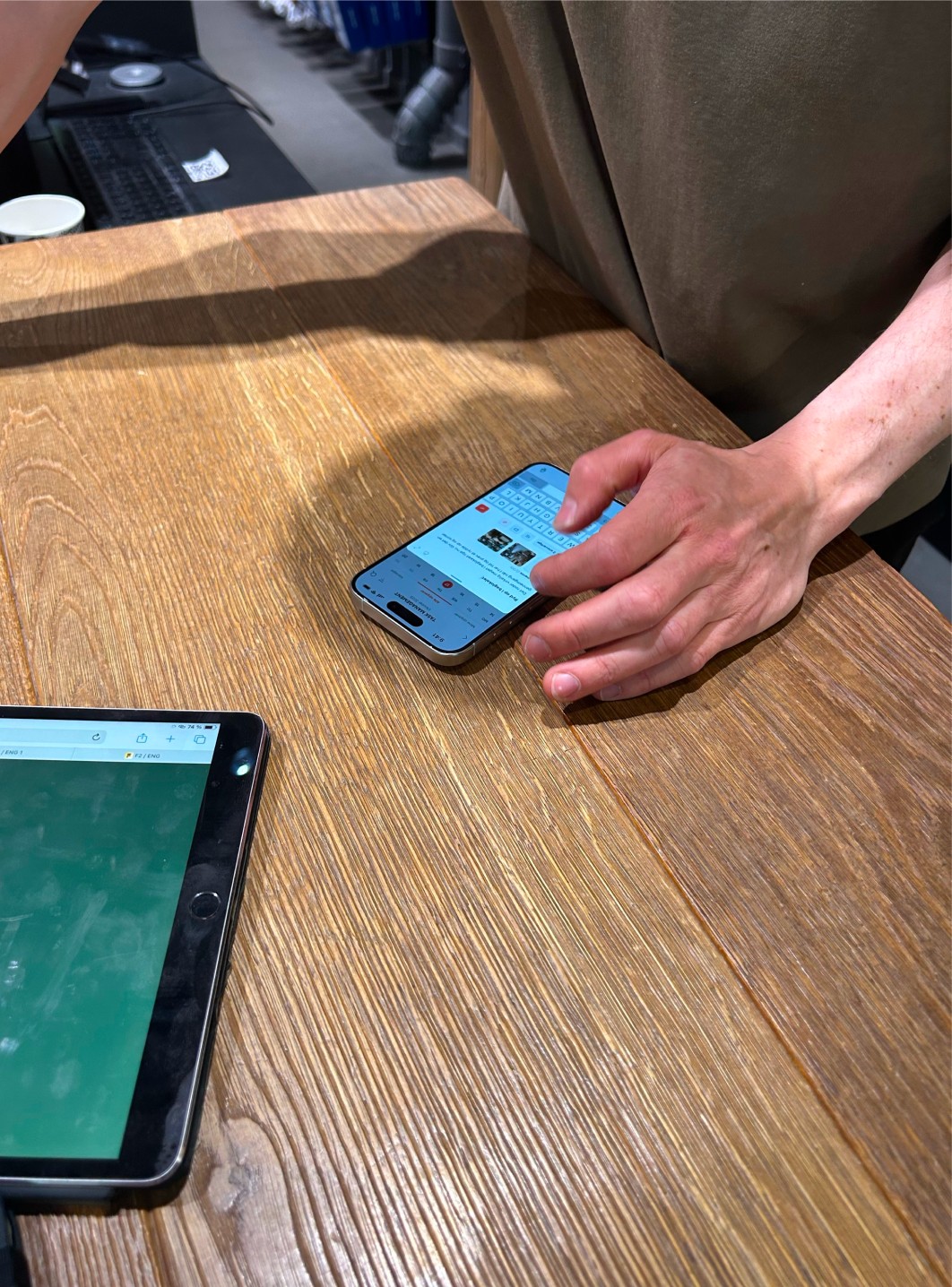
From early on, my role consisted of getting hands-on discovery research with clients and real users, through interviews, concept validation, usability testing. Our team visited retail stores, talked to frontliners, store managers and client stakeholders both on-site and digitally.
Across discovery and validation, data collection came from multiple sources -> such as field-work, quantitative surveys, stakeholder interviews, technical support and testing of interactive prototypes with users.

Simplicity in the face of complexity
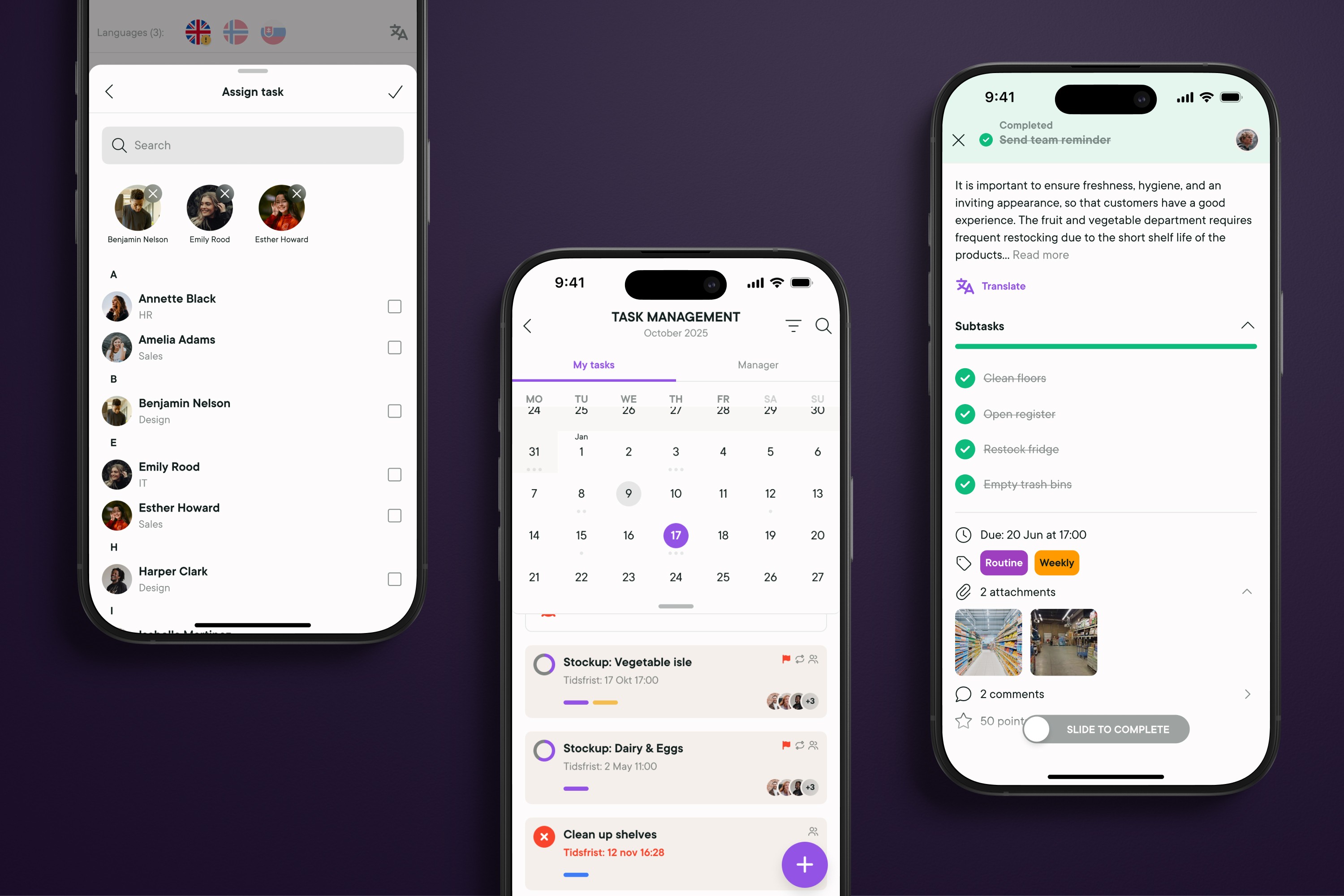
We focused on raising usability in spite of the inherent complexity of retail operations. This meant reducing friction across complex organisational hierarchies, large task backlogs, reporting, compliance demands and the constant rush of store foot-traffic. Features include:
Faster navigation with a adaptive calendar layout
Easier task creation with templates and streamlined assignment of tasks
Redesigned manager insights across both the App and Portal experience
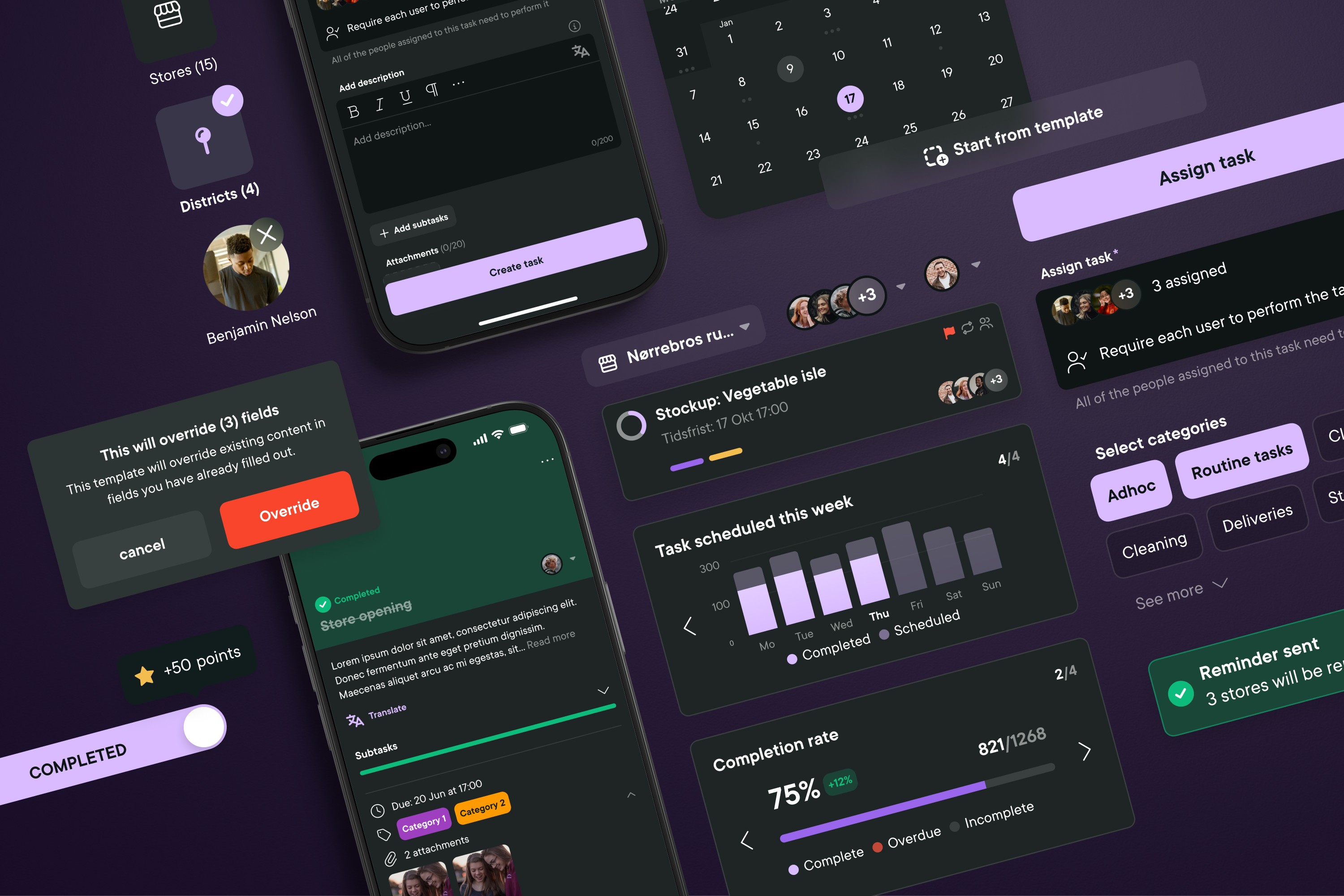
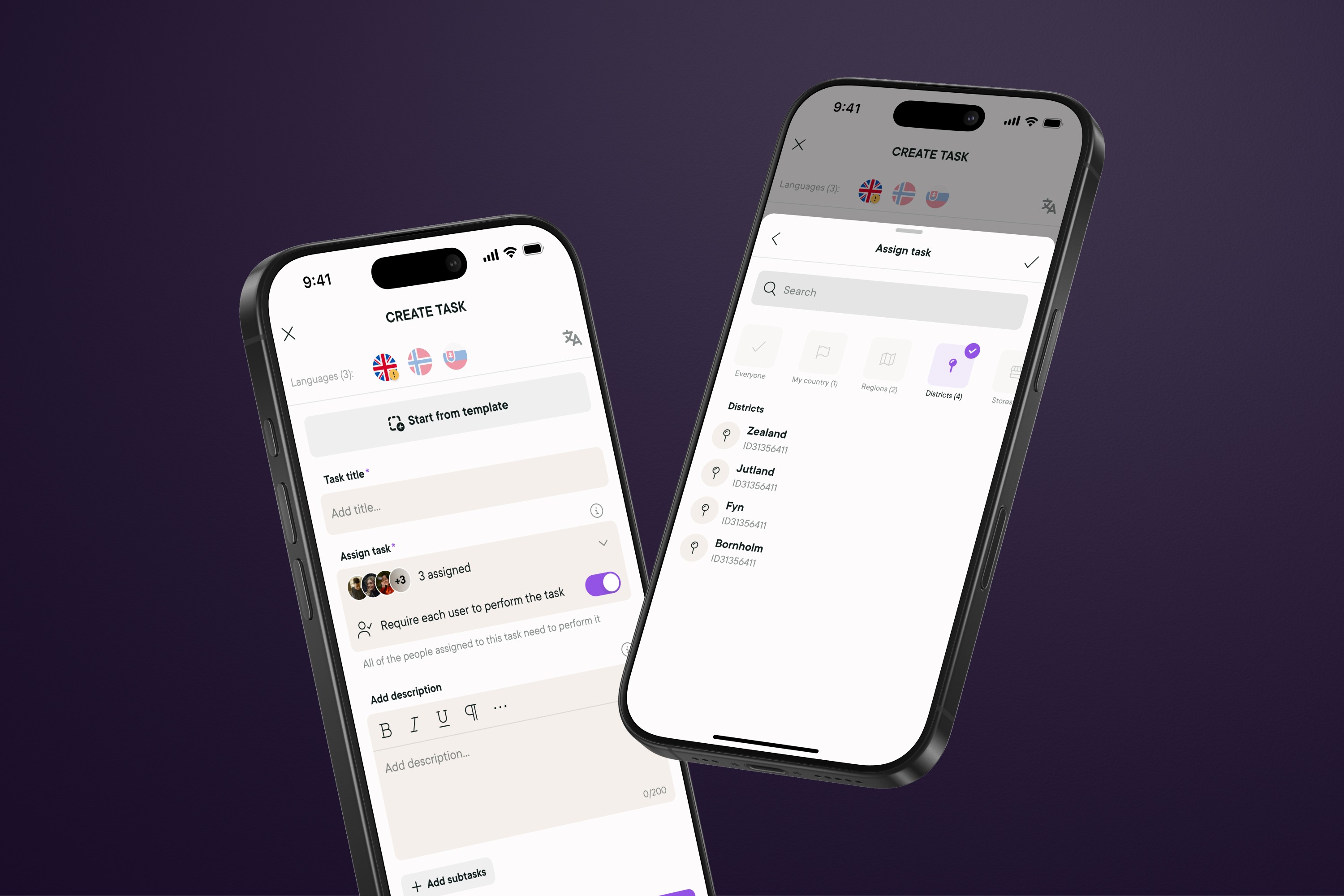

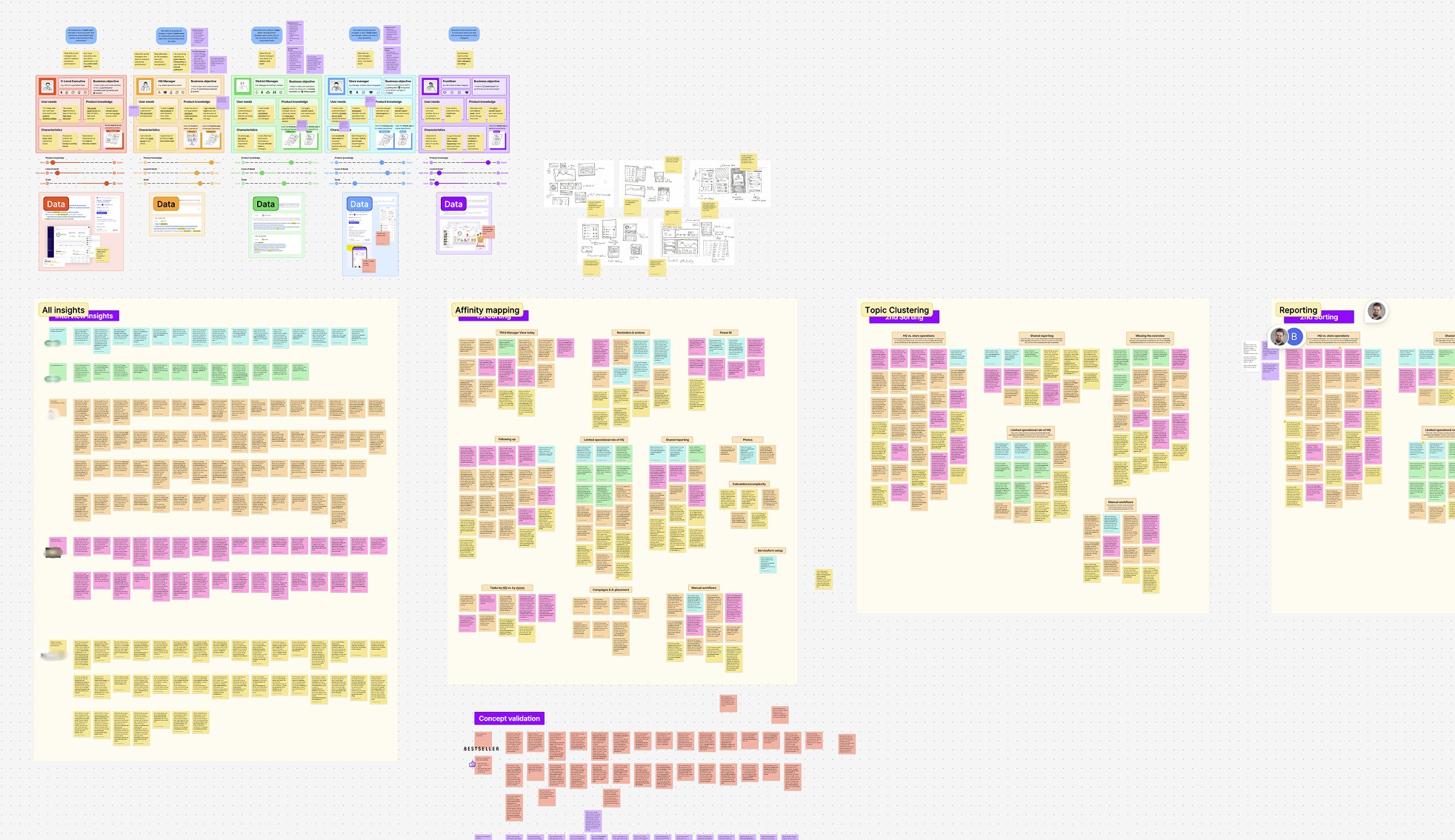
Product strategy was shared with our client advisory board to ensure fit with business requirements. Likewise discovery research findings was shared across the organisation in research reports and open meetings.
Closing the loop: from insight to action
Often, follow-up could become a painful bottleneck, leaving both HQ and store managers in the dark. Therefore we made insights and follow-up more actionable. To do this required improving the experience across both app- and Portal.
Desktop users were able to deep-dive into in-depth tracking of tasks, subtasks and overviewing scheduled operations. Meanwhile mobile users were given a concise, glanceable summary with improved navigation and filtering.